Typical Hosts of the Beef Tapeworm Worm
5 Parasite Control
- Describe fecal flotation testing, including fecal egg counts and fecal egg count reduction testing
- List common internal and external parasites of concern in common domestic species
- Describe life cycle of representative parasites as it pertains to control
- Describe drugs and mechanisms used for parasite control in common domestic species
- Ascertain refugia
- Draw pasture management for parasite control
*
Parasite Infection and Tools for Diagnosis
Parasites, either internal (for instance, worms) or external (for instance, fleas and ticks), draw nutrients abroad from the host, and tin cause disease. This chapter will focus on demonstration of how your agreement of the life wheel of parasites for various species in different environments will help minimize infection or infestation and help with command of the parasite in the environment. The biggest divergence appears to be in overall direction betwixt big animals and small animals. In large animals, at that place is business concern near resistance of parasites to available deworming medications and keen attention is paid to minimizing development of resistant parasites. This may include leaving a small population of worms untreated, so at that place ever are susceptible worms in the overall population and nosotros are not just continually killing off susceptible worms and leaving behind more than and more resistant worms. In small animals, where parasites can be a significant public health concern, it is a goal to impale all internal and external parasites. This does not hateful there are no concerns near resistance; in 2021, resistance in hookworms, i abdominal parasite of dogs, was described.
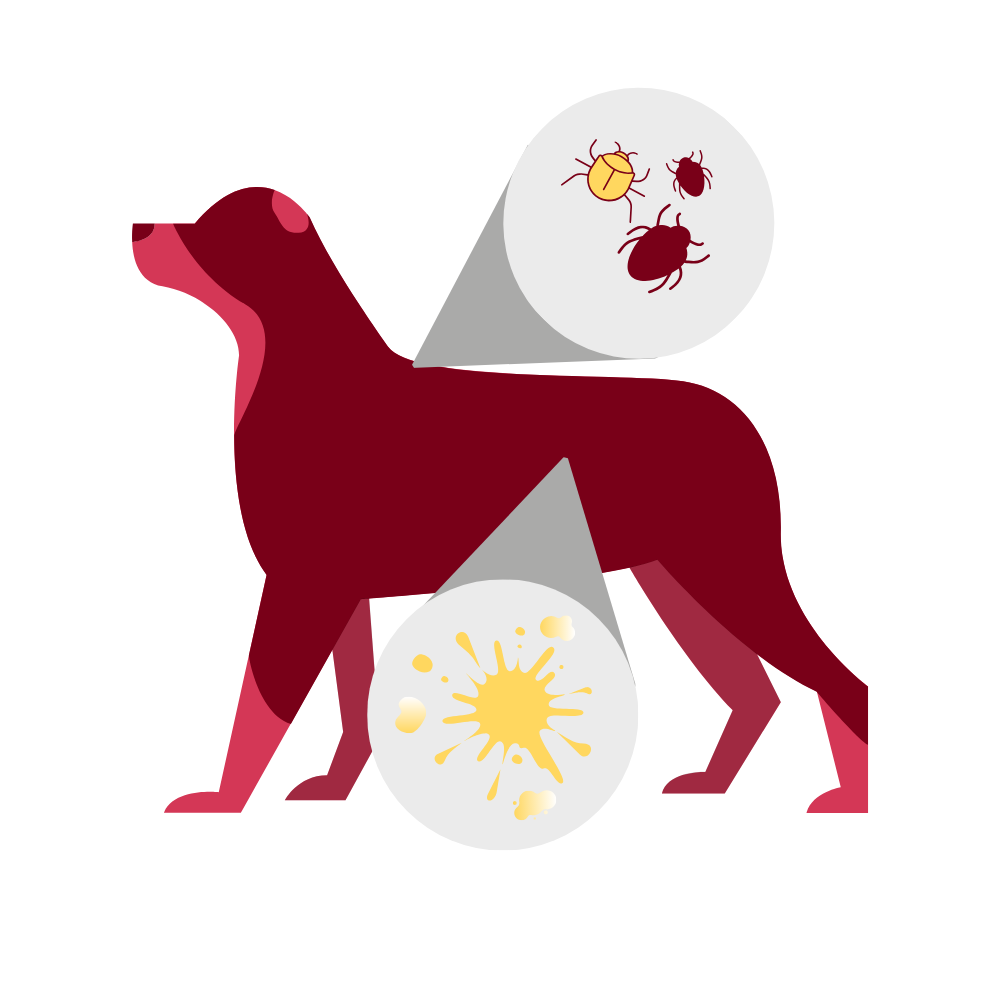
Gastrointestinal parasites are the class about unremarkably addressed. Some mutual tools used to evaluate presence of gastrointestinal parasites are fecal flotation tests and fecal egg counts. Fecal egg counts are basically quantified fecal flotations. You will too hear fecal flotations called fecal floats. Dr. Erin Burton provides the post-obit differentiation betwixt these two kinds of tests and how they're interpreted: A fecal flotation is a qualitative cess of the eggs in a sample, while a fecal egg count (FEC) is a quantitative assessment. Fecal flotations are lax on the amount of solution and feces used for each float and so give at best a semi-quantitative assessment of egg burden. FECs use a measured amount of feces and solution, so plug the number into a formula to get the egg count. FEC ordinarily is done more than in one case; in order to translate them they are performed over fourth dimension and because of that they are the test primarily used to definitively ascertain the degree of drug resistance in an brute or herd. It is also of import when evaluating a fecal float or FEC to exist aware of how prolific of an egg layer the nematode is. For example, one Toxocara canis (roundworm) tin produce over twenty,000 eggs each day while a whipworm only produces about chiliad per twenty-four hour period. Thus, having larger numbers of whipworm eggs on a bladder or FEC is more indicative of a heavy worm brunt than abundant Toxocara eggs on bladder or FEC. Finally, exist aware that not all gastrointestinal parasites can be identified by fecal flotation testing. For example, tapeworm eggs generally are released within tapeworm segments, or proglottids, and because the individual eggs are non in the feces and the proglottids are also heavy to float, tapeworm infections generally cannot be diagnosed by fecal flotation testing.

*
 Beef Cattle
Parasites can have potential negative effects on beef cattle that can vary from subclinical immune suppression, irritation, badgerer, appetite suppression, and decreased production, to severe clinical disease and death. The management of parasites is a component of a preventive wellness program that should also include amnesty management (vaccinations), management procedures, handling, and nutritional considerations that reflect an in-depth understanding of not only the beef product system but farm-specific issues and goals.
Internal Parasites
Internal parasites include roundworms (nematodes), tapeworms (cestodes), flukes (trematodes) and protozoans (such equally coccidia). Roundworms are considered the about economically important, and many programs revolve around their management. This section regarding internal parasites in beef cattle volition focus effectually roundworms. Understanding the parasite life cycle and the level of parasite pressure is key to the management of internal parasites.
The following is the basic life cycle of internal (gastrointestinal) parasites in cattle:
- Developed parasites live in the gastrointestinal tract of cattle and lay eggs that are shed in the manure.
- When a parasite egg is shed on the pasture in the carrion, this egg begins development, embryonating into a kickoff stage larva (L1), then molting into a second phase larva (L2), and finally molting again into a third and infective phase larva (L3).
- During the first ii larval stages in the fecal pat, the larva are fairly immobile, feeding off the bacteria and other debris constitute in the feces.
- During the tertiary larval phase the larva movement out of the fecal pat and onto nearby grass where they are consumed by cattle.
- L3 larvae maintain an external sheath covering that provides extra protection from environmental conditions allowing survival during winter or drought weather. This sheath prevents feeding, thus L3 larvae take a limited life span.
- Egg development is greatly dependent upon temperature and wet. Eggs that are passed in the middle of winter volition not develop until warm weather returns in the leap. Eggs passed in the middle of a drought or other unfavorable conditions may develop into infective larvae in the feces but without moisture cannot move away from the pat where they can be consumed by a host animal when it eats grass. Eggs that are shed during favorable atmospheric condition tin develop into infective larvae in just a few days if temperatures are warm and moisture is plentiful.
- Once consumed by cattle, the infective larvae mature into adults over a period of 3-4 weeks (shorter in younger cattle, longer in adult cattle) and begin to lay eggs, which are shed onto pastures to start the cycle over again.
- Some larvae can go inhibited or hypobiotic (go into hibernation) in the wall of the abomasum, sometimes referred to as L4 larvae. This process tin occur during the winter in the north and in the summertime in the s, with these larvae maturing and developing into adult worms when the surround for egg survival is more favorable.
Overall, the controlling of internal parasites has a significant positive return on investment for producers. The main focus of internal parasite control in beef cattle is roundworms. Diagnostics are needed to make up one's mind which specific worms are present. For beef cattle this is important considering the roundworm life cycle depends on the shedding of the eggs on pasture, larvae development, and the ingestion of the larvae during grazing. Since much of beef cattle production depends on grazing of pastures, the management of roundworms is cardinal. As long as cattle have access to grass, they volition take an internal parasite challenge.
Control practices should consider the grade (or historic period) of cattle, nutrition status, stress level, flavour, and likelihood of parasite contamination of the environment, and involve the employ of pasture management options as well equally the utilize of anthelmintic (dewormer) products for treatment.
| PRIORITIZED SUSCEPTIBILITY TO PARASITES | Ecology PARASITE Contagion LIKELIHOOD |
| Calves > Yearlings > Adult bulls > Adult cows | Spring / Early on summertime > Tardily summer (dry flavor) > Winter |
| Nutritionally challenged > Non nutritionally challenged | Continuously grazed pasture > Rested pasture > Not grazed / Hayed pasture > Recently tilled > Dry lot |
| Stressed (newly weaned, heat/cold stress, etc) > Not stressed |
Some pasture management activities may include leaving the pasture fallow, grazing other species, and dragging manure pats during the dry season to allow them to dry out.
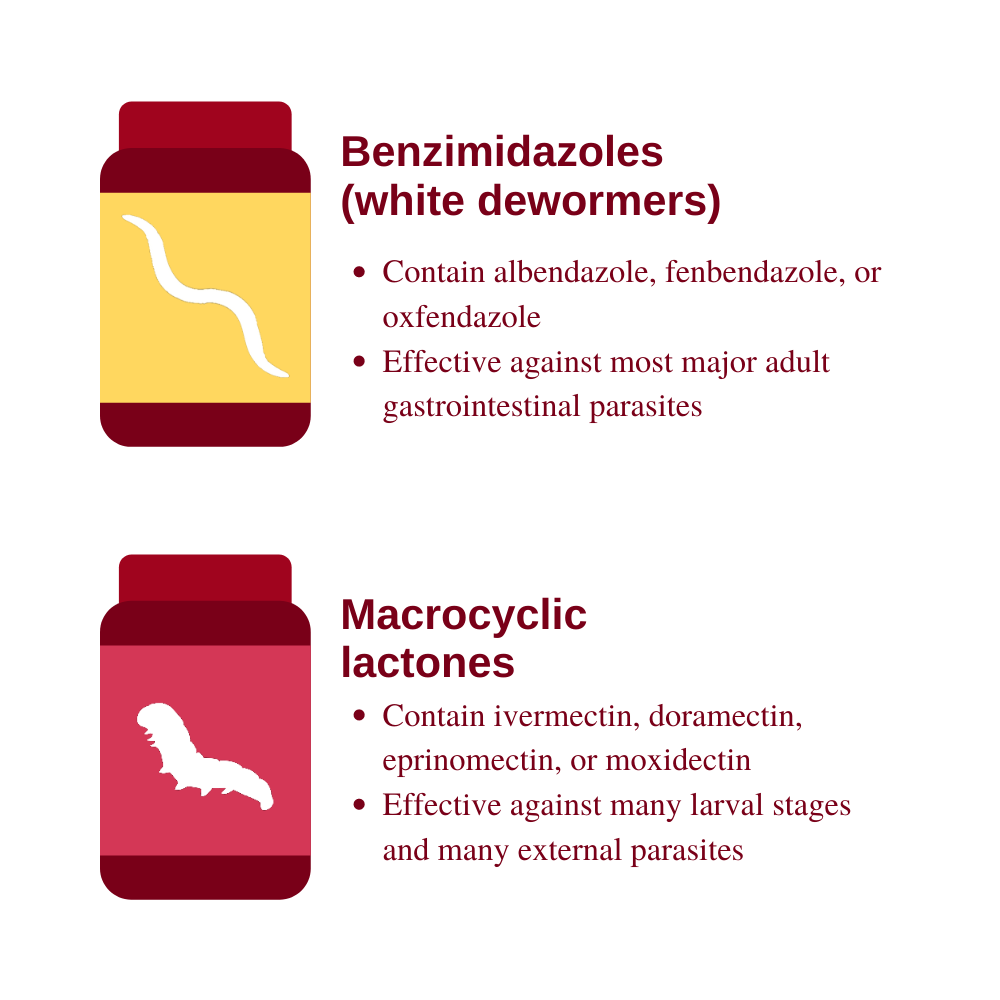
Anthelmintics used to control internal parasites for beef cattle come in several forms including paste, injectable, deluge, pour-on, bolus, and equally a feed or mineral additive. Products have varying lengths of action and costs, but autumn into two principal classes: benzimidazoles and macrocylic lactones. Benzimidazoles (white dewormers) bachelor commercially comprise albendazole, fenbendazole, or oxfendazole. Benzimidazoles are effective against most of the major adult gastrointestinal parasites and many of the larval stages. Products come in various oral formulations and accept a curt duration of efficacy. Macrocyclic lactones are the avermectins and milbemycins. Products in commercial utilize contain ivermectin, doramectin, eprinomectin, or moxidectin. The macrocyclic lactones have a potent, broad antiparasitic spectrum at low dose levels. They are agile against many larval stages (including hypobiotic larvae) and are active against many external parasites as well. Products are bachelor as oral, subcutaneous, and pour-on formulations for use in cattle. Duration of efficacy varies with the product and may be up to 35 days.
Approaches used to treat parasites in beefiness cattle are considered strategic deworming. This is the practise of treating cattle at times to not only go the benefit in that animal to foreclose economical loss simply likewise reduce environmental contamination for a menses of time at least equal to the life bicycle of the parasite removed.
Keys to strategic deworming are to place cattle that are not shedding eggs on pastures that are not infected; this is accomplished by deworming prior to leap turnout or fall treatment in the n (following killing frost). The do good of treating in the fall is that cattle should be free of internal parasites all winter and going into the spring turnout (assuming an constructive product was used). Cattle that go onto pasture at spring turnout are costless of parasites, thus not shedding eggs, and will be consuming the infective larvae on the pasture if the pasture is contaminated. By consuming the infective larvae and not shedding new ones the cows will be reducing the load on the pasture (acting every bit vacuum cleaners). Later a time the ingested infective larvae will mature and cows will start shedding eggs. Strategic deworming times the treatment so equally to reduce the worm brunt on the cattle and also decrease the parasite contagion of the pasture during the highest parasite period (jump/early summer).
The timing of these treatments can and should be timed with other management procedures such as summer vaccines for the calves and autumn processing of calves and cows. Depending on the geographic location, such as in the south where the weather (moisture) is dissimilar, timings may be unlike, as well equally the type of grazing program.
Calves and stockers should exist considered within a strategic plan while on a grazing program. Times of concern include prior to weaning while nursing the moo-cow and while intensively grazing every bit a stocker. Calves should not be dewormed while existence weaned. Preweaning treatment, prior to the stress of weaning, can reduce the potential negative impact on immune function as well as better performance. Whatsoever time cattle are moving from pasture into a dry lot setting is a adept time to deworm equally this should clear cattle of parasite load for the time in the dry lot (similar to fall deworming) as there is no green grass to graze.
For the control of other types of internal parasites such every bit tapeworms (cestodes), flukes (trematodes), and protozoans (such as coccidia), similar concepts are practical. Information technology is important to understand the different life cycles of these different types of parasites every bit well equally the efficacy of products used to treat them.
External Parasites
The major external parasites that affect cattle include flies, grubs, lice, ticks, and mites. These external parasites feed on torso tissues such as blood and skin, and in addition they cause irritation and discomfort that issue in reduced weight gain and lost production. Parasites that take blood meals have the potential to serve equally vectors for the transmission of diseases.
Horn Flies
Horn flies are blood-sucking flies that stay on the shoulders and backs of cattle almost continuously. A horn fly leaves the dorsum of a cow or calf simply to lay eggs in fresh manure. They accept blood meals from the host 24 hours a solar day.
Face up Flies
Face flies cluster on the faces of cattle and feed on secretions from the mucous membranes of the eyes, nose, and lips. Face flies practise not suck claret. They do irritate the surface of the eyeball and may comport pathogens that contribute to pinkeye bug. They spend just a minor portion of their life on cattle.
Stable Flies
Stable flies feed primarily on the legs and lower abdomen of cattle and accept blood meals two to three times a day depending on the weather. After feeding they motion to a resting place to digest the blood meal. Stable flies are associated with substantial economic loss in cattle from the blood loss and hurting from feeding. Every bit few equally five flies per leg is economically significant in cattle.
Ticks
Ticks cause blood loss and discomfort, and tin can act as vectors for illness spread. Loftier concentrations of ticks ordinarily occur in brushy pastures and woodlands.
Lice
Lice that bear upon cattle are either of the biting or sucking blazon, and crusade skin irritation and itching. The entire life cycle of lice is on the host and they are present twelvemonth round but populations increment in winter months. Lice spread through contact with infested cattle. Infested cattle tin experience reduced appetite and anemia, and appear unthrifty.
Mites
In cattle, mites can cause hair loss and a thickening of the peel. Infestation by mites is called mange. Mites are spread past close contact. Severe mange can weaken cattle and brand them vulnerable to diseases. Certain types of mites are reportable.
Cattle Grubs (warbles)
Cattle grubs, or warbles, are the larval stage of the heel fly. The larvae migrate from the animal's heel, where the eggs are deposited by the developed wing in early summer, to the back of the animal. The larvae tin can cause damage to the hide (due to the breathing pigsty they create) and if treated during the wrong time of the year can cause paralysis due to their location virtually the spinal column. Cattle should non be treated with a grubicide between November fifteen and March ane if cattle grubs are a business organisation.
Control of External Parasites
Control of external parasites commonly revolves around the utilize of insecticides. These unremarkably are a pyrethrin or an organophosphate. Strategies or combinations of strategies for delivery include: dust bags, back-rubbers (oilers), fauna sprays, pour-ons, and insecticide impregnated ear tags. In addition, the use of injectable products or pour-ons with systemic activity piece of work well to control lice and mites. Larvicides tin also be part of control program for sure types of flies besides every bit the employ of predator wasps and environmental management. The use of dust bags and back-rubbers (oilers) tin can provide delivery of insecticides and economic fly control if located in an area that cattle are forced to move through such every bit a gateway or over a mineral feeder.
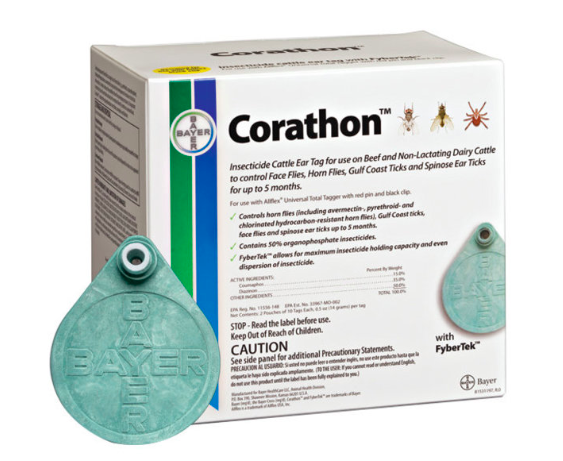
Insecticide sprays and pour-ons are constructive for many dissimilar external parasites but have the drawback of increased animal handling costs and stress during the fly-season. Insecticide sprays are the only way to manage developed stable flies. Ear tags impregnated with insecticide can exist effective in fly control. Maximizing command requires two tags per animal, and timing of application with peak wing numbers often requires a separate treatment session of the animals. Ear tags provide good face fly control if applied properly.
Insecticide Ear Tag Fly Control
Larvicides prevent fly larvae from developing in to adults and are administered through free choice mineral. To exist effective cattle must eat an adequate amount and not be in the proximity of untreated cattle.
Injectable products and pour-ons with systemic action are mainly the macrocyclic lactones. These are effective against some flies too as mites and lice. For mites and lice a second handling may be needed in two to three weeks to kill newly hatched parasites unless using an extended elapsing product.
Sanitation or cleaning up of wasted feed or manure that serve as egg-laying sites for certain flies can profoundly contribute to the command of certain flies locally. In addition, egg laying sites may be treated with a larvicide.
Environmental direction may be a primal component to tick control. The reduction of brushy areas and thick wooded areas reduces the habitat for the ticks and reduces exposure.
Certain native parasitic wasps are used as biological control agents of fly populations. Currently, farmers tin buy parasitic wasps from commercial insectaries. These wasps emerge into machismo from the pupal stage, where they develop wings. They fly from the release stations in which they accept been held, hung from barn ceilings or other out-of-reach places. The wasps only target flies in their pupal stage. When the wasp finds a pupa in soil or litter, she inserts her stinger and withdraws it, cartoon blood and paralyzing the pupa and inserting i egg. The egg hatches after 1 24-hour interval, and the larva feeds on body fluids and organs for ii-4 weeks. Eventually, the wasp chews its fashion out of the dead host'due south puparium and flies away as an adult.

Example Strategic Command Program
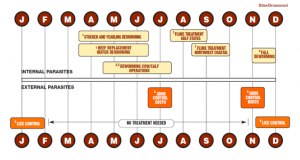
- Stocker, yearling and replacement heifers dewormed at turnout, four and eight weeks afterward onset of grazing (0-iv-8).
- Cow/calf deworming half dozen weeks after onset of grazing.
- If cattle were not dewormed in the fall, adult cows should be dewormed at pasture turnout and again six weeks afterwards onset of grazing.
- All cattle retained over wintertime should exist dewormed.
- During lice flavor, two treatments ii to three weeks apart may be necessary.
- Grub treatment iii to iv months after the end of heel fly flavor, varies s to northward. Requires systemic, annual command merely.
- Cattle grazed along the Gulf Coast and Northwest coast should exist treated for adult and immature liver flukes.
(Horn-fly command every bit needed to go along populations below 200 flies per animal.)
There is increasing testify of antiparasitic resistance in grazing species, such as cattle, small ruminants (sheep and goats), and horses, both globally and inside the United States. Antiparasitic resistance is the genetic power of parasites to survive handling with an antiparasitic drug that was more often than not constructive confronting those parasites in the by.
Many factors contribute to antiparasitic resistance, including the biology of the parasite; the immune status of the host creature; treatment practices; drug properties; and certain livestock management practices. To help combat this emerging problem, the FDA'southward Center for Veterinary Medicine started the Antiparasitic Resistance Direction Strategy (ARMS).
*
 Dairy Cattle
As in beef cattle, the overarching theme for the prevention strategy of parasitic infection is to reduce the animals' exposure to parasites and their infectious forms. Because multiple animals will be exposed, any strategy volition focus on unabridged groups of animals rather than individuals. Then far, this is similar to prevention strategies for whatsoever other infectious diseases on farm. Nonetheless, when thinking about the prevention of parasite infections on farm, the veterinarian must exist aware of the infectious form of the parasite (for case, eggs versus larvae) and whether or not other hosts are involved in the life bike. So the best parasiticide is selected and management practices, such equally grazing schedule, are properly timed to avoid exposure to infectious parasite forms in the environment. In most cases, prevention strategies therefore boil down to good on-farm hygiene and employ of well-timed and correctly selected dewormers, also equally pasture direction equally described for beef cattle. There are different forms of deworming medications for dairy cattle. For simplicity of application, many are cascade-ons or feed additives; some are injectables. Oral pastes or any conception that requires you to handle the animals' heads is rarely used because it is labor-intensive. Any product used in an fauna that may be used for milk or meat has a specific withdrawal time. Withdrawal time is defined as the period from when the drug was used until the milk may be put in the bulk tank or the animal sent to slaughter for meat. How long the withdrawal time is and whether y'all can apply a given drug in a lactating cow depends on the product. One thing that people might not be enlightened of – once a cow has calved for the beginning fourth dimension, she is always considered to be a lactating animal, even if she's not existence milked (dry out menstruation). Ever, always, read the label to know what the product volition treat for, at what dosage and frequency it should be used, by what route it should be administered, what class of animals it is for, and withdrawal times.

*
 Small Ruminants
In general, the number of internal parasites in sheep and goats volition increment with number of host animals (higher stocking charge per unit); during warm, humid atmospheric condition; and when pastures are grazed too brusque. The number of internal parasites volition decrease in hot, dry weather; if a non-host brute (cattle or horses) grazes the aforementioned pasture; or if the pasture has been rested (no grazing, larvae dice off naturally).
Some worms in a population volition survive even the most appropriate drug treatments. This is due to genetic option for resistant worms in a treated population. Modern dewormers are effective, broad in spectrum, cheap, and safe just people have relied more than on drugs than on husbandry as a way to control parasites, leading to increased parasite resistance. To minimize development of parasite resistance to dewormers, apply treatments specifically and selectively.
Clinical signs of parasitism in sheep and goats include diarrhea, bottle jaw (submandibular edema secondary to hypoproteinemia), anemia, and rough hair coat. Subclinical effects of parasitism include reduced weaning weight, reduced milk production, reduced reproductive functioning, reduced growth rate, and increased susceptibility to disease.
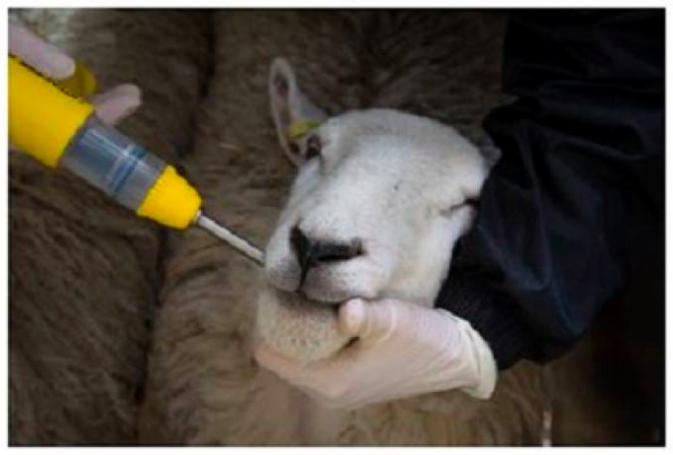
Treatment of sheep often includes drenching. The veterinarian should perform diagnostics to decide type of parasite(due south) present. You may wish to perform a fecal egg count before and after handling (fecal egg count reduction test) to determine how effective your treatment was. Weigh the sheep and prepare the dewormer based on weight. Deliver the dewormer over the natural language in the back of the throat with a drench tip or drench gun.
To make up one's mind who needs to be dewormed, veterinarians can do a fecal egg count (FEC) to measure out number of worm eggs per gram of feces (epg). General class of parasites is identified (for example, strongyle-blazon) only the specific parasite rarely is identified (information technology is difficult to differentiate between Haemonchus, Teladorsagia (formerly Ostertagia), and Trichostrongyles). Ane recommendation for goats is to deworm bucks and dry out (non-lactating) does if at that place are more than 2000 epg, lactating does if there are more than than 750 epg, and all other animals if there are more than 1000 epg. Non all of the animals in the herd will exist conveying parasites to the same extent and schemes exist that permit veterinarians to assess the animate being clinically and from that, decide which individuals in the herd should be dewormed. This prevents treating animals unnecessarily, which is better for their health and less expensive for the owner, and helps prevent development of resistant parasites by minimizing utilise of deworming medications.
Not treating all animals likewise ways you're leaving a sure number of untreated worms in the population; because these worms have not been exposed to dewormer, you're allowing them to persist and maintaining a more genetically diverse worm population. This population of untreated worms (called refugia) can exist a valuable thing to consider when facing problems with anthelmintic resistance.
FAMACHA© is a diagnostic test to assistance small ruminant producers identify animals that require anthelmintic treatment and those that do not require deworming. The tool is a card that matches eyelid color to anemia levels, an indicator of clinical infection with parasites that cause anemia. A proficient resource well-nigh FAMACHA testing and full general information about parasite control in small ruminants is the American Consortium for Small Ruminant Parasite Control.
As in cattle, pasture management is another important component of parasite control. To stop the parasite life wheel, remove sheep and goats from pastures for 3-6 months to allow worm larvae in the pasture to die off. Alternate or co-graze pastures with horses or developed cattle. Maintain stocking rates of no more than vi-eight sheep or goats per acre.
General considerations for parasite command include:
- Do not overgraze pastures; the vast majority of infective nematode larvae are on the first 2" of vegetation for a given establish.
- Spread manure in hot, dry conditions to kill worm eggs and larvae that may be in the carrion.
- Rotate crops and livestock.
- Ensure a high plane of diet for ewes/does and lambs/kids.
- Use trunk condition score and other clinical signs to monitor flock health.
*
 Swine
Swine
Management and housing techniques used in mod commercial pig product, besides as the prudent use of anti-parasitic products, has dramatically reduced, and in many cases, eliminated the affliction and animal welfare issues associated with parasite infections in pigs. Although parasites are no longer a significant challenge to the majority of pigs being produced in N America, they proceed to play a role in some types of pig production, primarily in those animals exposed to outdoor environments. Therefore, a solid agreement of their types and prevention are of import.
Internal Parasites
Categories of internal parasites include nematodes (roundworms), thorny-headed worms, tapeworms, and protozoa. Ascarus suum (a nematode or roundworm) and coccidia (a protozoan) are the most common internal parasites in commercial pig production at this time.
External Parasites
Categories of external parasites include ticks, mites, lice, mosquitoes, and flies. Mosquitoes and flies continue to exist common challenges in both indoor and outdoor hog production while ticks, mites, and lice are primarily limited to pigs that are raised outdoors. Mosquitoes and biting flies are known to mechanically spread important diseases betwixt groups and premises.
Prevention of Parasite Infections
Key factors to consider for the prevention of both internal and external parasite infections include:
- Source negative pigs
- Cognition of negative parasite status of replacement convenance stock prior to purchase and the prevention of moving positive stock into negative herds
- Minimize dose or eliminate exposure completely
- Indoor production eliminates access to normal source of infection
- All in-all out production: regular emptying of facilities between product groups
- Sanitation: regular cleaning of facilities using appropriate detergent and disinfectant between production groups
- Eliminate areas where external parasites can breed and develop (eastward.g. elimination of standing water reservoirs decreases mosquito levels)
- Monitoring plan to insure early identification
- A expert monitoring programme allows the early detection of a parasite challenge and the early application of intervention strategies.
- This may include a routine fecal sampling program, ascertainment of clinical signs, and gross signs on routine post mortems or slaughter checks.
- Therapeutic prevention programs
- Strategic preventive therapy programs are commonly used to treat parasite infections and then that the claiming to the private and challenge to herd mates (via shedding) is minimized.

*
 Horses
The internal parasites of greatest importance among N American horses are small strongyles (cyathostomes), large strongyles, ascarids (roundworms), tapeworms, and bots. Strongyles and ascarids are transmitted via a straight fecal-oral route, tapeworms have a more indirect fecal-oral transmission pattern involving the orbatid mite as intermediate host, and bots are transmitted when horses ingest fly eggs deposited on the hairs of their front end legs. Pocket-sized strongyles, ascarids (in young horses under 2 years of age), and tapeworms are the main focus of an equine parasite control program, as they accept the greatest potential to cause disease. Bots rarely cause disease and are generally well controlled as a side do good of the command program used to control strongyles and ascarids.
Ascarids (Parascaris equorum) are a pregnant health take a chance for foals, weanlings, and yearlings, but not for adult horses due to development of age-related immunity. Adult horses within a given herd can vary greatly in their susceptibility to parasite infestation, particularly with respect to pocket-size strongyles. A pocket-sized pct of horses in the herd tend to harbor the majority of worms, and these horses are targeted for more than frequent deworming.
Factors contributing to gastrointestinal parasitism in the horse are similar to those in other species: animal age; stocking density; geography and climate; presence and abundance of intermediate hosts; whether the animals are on pasture or dry out lot; and pasture/paddock direction practices.
Low-cal parasite burdens are not associated with clinical disease, simply heavy burdens can result in disease and death. Clinical signs of heavy parasitism include weight loss, stunted growth in juvenile horses, anemia and hypoproteinemia, colic (abdominal pain), acute or chronic diarrhea, and pulmonary injury. Young horses and immunodeficient geriatric horses are most susceptible to heavy parasite burdens and disease, but all horses are susceptible under the correct conditions and in the absenteeism of an effective parasite control plan.
The goals of an equine parasite control program are to:
- Minimize the take chances of parasite-related illness.
- Limit the extent of parasite shedding into the environment.
- Preserve the effectiveness of anti-parasitic medications.
As with vaccination programs, in that location is no such thing as a "one-size-fits-all" parasite control programme that is appropriate for use in all horses!
Anti-Parasitic Medications
Over the past 30 years, widespread frequent utilize of over-the-counter oral anthelmintic products has resulted in excellent control of parasite-related disease across the population, but besides accelerated the development of drug resistance among parasites. It was not uncommon to meet that every horse on a farm was getting dewormed every 8 weeks, and often more frequently than that! In other words, too rigorous and indiscriminate an approach was taken. Resistance bug are of nifty business because at that place are no new parasite control products in the drug production pipeline.
Current recommendations strive to avoid development of further resistance bug while nevertheless providing adequate protection from parasite-related illness. Compared to historical approaches, we now recommend a more than strategic and targeted arroyo that results in much less frequent deworming for the majority of horses.
Horses are dewormed using over-the-counter commercial oral paste products that are dosed on the footing of body weight. Bachelor medications include the macrocyclic lactones (ivermectin and moxidectin), pyrantel pamoate and tartrate, benzimidazoles (fenbendazole and oxibendazole), and praziquantel (available but in combination with ivermectin or moxidectin). To date, most parasite resistance is related to the benzimidazole and pyrantel products, but some resistance to the avermectins has also begun to appear recently. The parasite species most likely to exhibit resistance are small strongyles and ascarids.
A variety of herbal and organic deworming products are available and widely promoted among horse owners and managers, but in that location is no scientific evidence that these products are effective. They have not undergone formal testing for safety and efficacy, and are not approved or licensed as drugs past the FDA. Because non-drug products are allowed much more leniency in labeling, manufacturers tin can brand almost any claim they want without having to substantiate that claim.
Design of Parasite Control Programs
In developed horses, decision-making well-nigh which horses to deworm, and with what products, is guided by series quantitative fecal egg count (FEC) surveillance. Determination of the number of strongyle eggs per gram (epg) of manure helps owners and veterinarians to (i) estimate individual parasite burdens; (two) identify the horses with moderate or heavy parasite burdens that volition do good from deworming; (iii) identify the specific horses within the herd that serve as the major long-term parasite reservoirs and require more frequent deworming; and (4) determine which specific deworming products are effective confronting parasites on that subcontract.
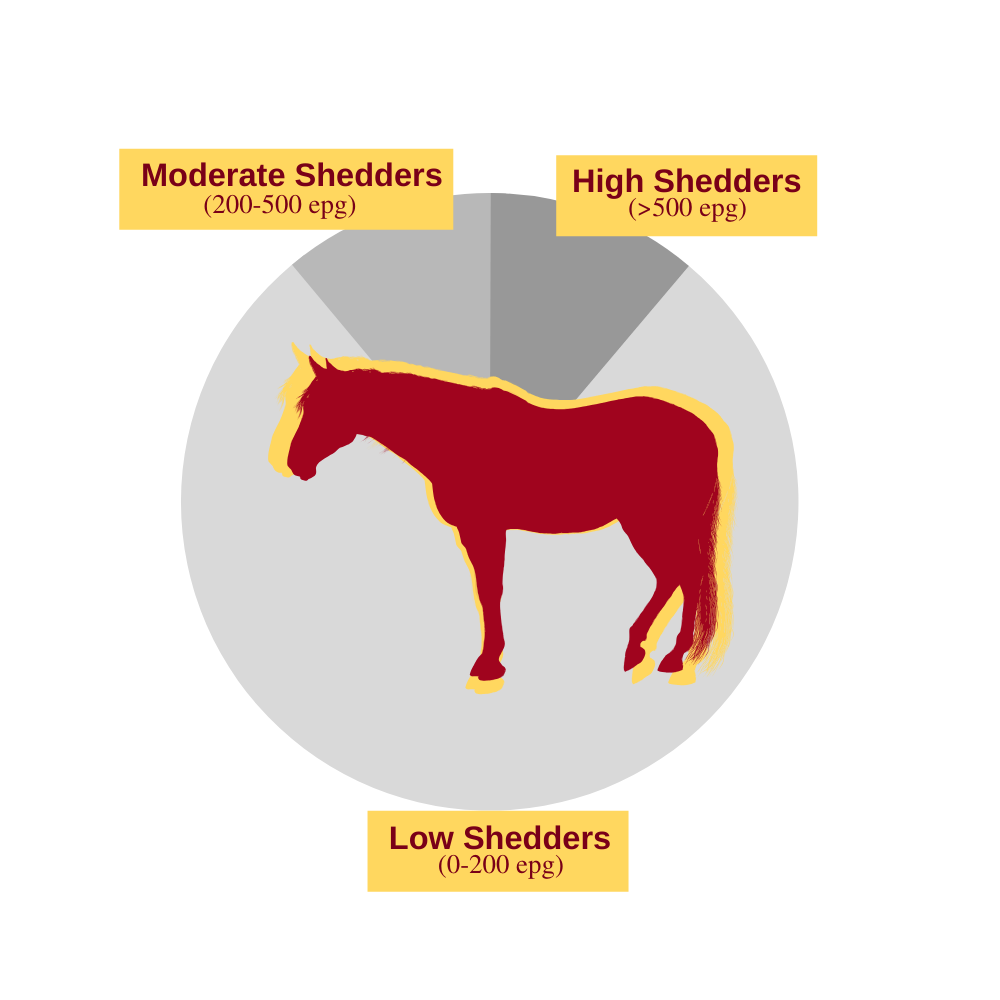
On the basis of FEC, horses are categorized as low shedders (0-200 epg), moderate shedders (200-500 epg), or high shedders (> 500 epg). In a well managed herd it is common for 70-90% of adult horses to fall in the low-shedding category; these horses require as few as ii deworming treatments per year (bound and fall). Management of moderate shedders varies past region, but these horses typically require at least one additional deworming treatment during the parasite manual season. In Minnesota, for case, these horses more often than not receive one boosted treatment for strongyles between April and October, with the timing dictated by the egg reappearance period (ERP) for the dewormer used in spring. Heavy shedders crave treatment throughout the jump/summer parasite flavour, though never any earlier than the expected ERP for the deworming products used.
Fecal egg count reduction tests (FECRT) are used to evaluate the efficacy of specific deworming agents confronting both strongyles and ascarids. This entails running FEC tests immediately prior to worming and then 14 days subsequently worming, and so calculating the percent reduction in fecal egg counts due to handling. Specific cut-offs for suspicion of resistance vary betwixt medications and parasites, but in general a dewormer should be dropping egg counts by xc-95% or more if the parasite is susceptible to its killing effects.
Under this blazon of programme, developed horses with innate resistance to parasitism that carry depression worm burdens are dewormed simply one-2 times per twelvemonth. This ensures that many of the worms in the population are able to avoid the frequent exposure to deworming medications that selects for development of drug resistance. By contrast, horses with high worm burdens that are at greater risk for affliction and contribute almost to environmental contamination are selected for more than frequent dosing. This applies some selection pressure level for development of resistance, but is counterbalanced by the larger population of worms that remain genetically susceptible (refugia). The higher the proportion of worms in refugia, the more slowly resistance develops!
Foals, weanlings, and yearlings are approached differently due to their high level of susceptibility to parasitism in general, and ascarids in detail. Current recommendations are to care for them a minimum of iv times in the first year of life, with the first treatment at 2-3 months of age using a benzimidazole (for example, fenbendazole). A 2d deworming is recommended simply prior to weaning at approximately half-dozen months of age, prior to which an FEC is performed to make up one's mind whether worm burdens consist primarily of ascarids or of strongyles. The third and quaternary treatments are administered at approximately 9 and 12 months of historic period, and should target primarily strongyles. One of those treatments should also include praziquantel to accost tapeworms. Recently dewormed weanlings should exist turned out into the cleanest pastures with the lowest worm/egg burdens.
Fecal egg counts are non useful for diagnosis of tapeworm or bot infestation, so most horses are just treated annually for these in late fall on the assumption that a significant infestation exists. Praziquantel is the just medication licensed for treatment of tapeworms, while bots are treated with ivermectin or moxidectin. Timing this treatment for late in the fall serves to "articulate out" the existing population of bots and tapeworms at a time when immediate reinfection is not possible because the flies and mites responsible for manual are no longer active. Horses volition brainstorm to re-accumulate those parasites the following spring when flies and mites appear to resume manual.
Environmental Management
As in other species, periodic administration of anthelmintic drugs is only ane element of an effective command program and environmental sanitation and management are also important. The most effective approach is removal of manure from paddocks and pastures; twice-weekly manure collection is recommended. Dragging or harrowing paddocks and pastures to intermission up manure pats is much less constructive, and only recommended for geographic regions in which spread manure volition dry quickly. Composting of manure and soiled bedding generates enough estrus to kill parasite larvae and eggs. Not-composted manure should never be spread on pastures as this will serve to increment the level of parasite contamination. Reducing animal numbers, reducing stocking density, and avoiding overgrazing volition reduce parasite exposure, as volition rotating pastures and grazing other types of livestock on rested pastures. New horses should have an FEC on arrival, and be dewormed if warranted, before beingness turned out with resident horses.
*
 Small Animals
This is an excerpt from a volume for pet owners (Root Kustritz MV (ed), The University of Minnesota Guide to Domestic dog and Cat Wellness, ASIN: B00GCC0YN8).
Most puppies and kittens are built-in carrying some internal parasites, even if they are born into first-class breeding facilities. Your veterinarian can cheque the puppy or kitten'southward carrion for evidence of the parasites, but many infected puppies and kittens will test negative. Your veterinarian may recommend routine worming for your puppy or kitten several times when they are young, to ensure they are not conveying internal parasites. Adult dogs also may carry these parasites. If worm eggs in the feces hatch outside, the young worms may live in your lawn and infect humans, specially children, and other animals. Because of this, all feces should be picked upwards and disposed of immediately.
Intestinal parasites are treated with specific anti-parasitic drugs. *Note from Dr. Root for Preventive Medicine course – classes of wormers commonly used are those described for beef cattle (benzimidazoles and macrocyclic lactones) with some specific wormers for other classes used for things similar tapeworms. Each blazon of worm is treated with a specific drug and so it is important that the specific type of parasite present in your creature is identified. Over-the-counter wormers generally are non as effective every bit those available from your veterinarian. Some medications must exist dosed more than once to destroy both juvenile and adult worms.
Heartworm is a form of internal parasite that infests the circulatory organisation. Immature worms are injected by infected mosquitoes into the dog or cat. These young worms eventually lodge in the eye as adults where they mate and produce young worms that broadcast in your canis familiaris or true cat, infecting mosquitoes that feed on other animals and continuing the life cycle. Your dog or cat can contract heartworm anywhere they meet mosquitoes, including indoors. The adult heartworms crusade astringent and potentially fatal harm to the middle, lungs, and other vital organs. Clinical signs of heartworm disease include coughing, fatigue, loss of ambition, and mayhap episodes of fainting. Many infected dogs and cats testify no signs of illness. Your veterinarian will test your canis familiaris yearly for this disorder; cats should be tested as well. Treatment is difficult so prevention is preferred. In that location is no treatment available for cats, and then prevention is critical. Fortunately, cats are more resistant to heartworm disease than are dogs, and then incidence of heartworm disease is lower in cats than in dogs. Your dog should be tested yearly and preventative medications given monthly. Heartworm prevention can be instituted in puppies as early as 6-eight weeks of historic period. Be aware that many heartworm medications also protect your pet against intestinal parasites described earlier.

*
| Mutual Proper noun | APPEARANCE | CLINICAL SIGNS | HOW TRANSMITTED |
| Roundworms | 3-12″ long, spaghetti-similar | Usually exercise not cause clinical signs; may see worms passed in carrion, young animals may testify poor weight gain. Most common in dogs and cats less than 6 months of historic period. | Eggs in feces, across the placenta or while nursing from the dam |
| Hookworms | Very modest, thread-similar | May see anemia, digested or frank claret in feces. | Eggs or young worms in feces, on the ground, nursing from the dam, penetration of larvae through peel |
| Whipworms | Very minor, thread-like | Commonly practise not cause clinical signs; may occasionally exist associated with diarrhea. | Eggs in feces, on the ground |
| Tapeworms | Very long and flat, fabricated up of segments that expect like grains of rice caught in the hair effectually the anus | May cause weight loss. | Eating rabbits, rodents, or eating fleas containing the worm. |
External parasites of virtually concern are ticks and fleas. Fleas feed on claret and can transmit affliction, including tapeworms. Fleas are primarily an environmental concern; 95% of the flea population (eggs, larvae and pupae) live in the environment and only 5% (adult) live on animals. Exterior areas exposed to sunlight in summer or extreme cold in winter are unlikely to harbor fleas. Inside the home, flea populations will be concentrated where the animal spends the most fourth dimension resting or sleeping. Fleas are the nigh common external parasite in small animals; cats are twice as likely as dogs to have fleas when examined by veterinarians. Successful flea command requires treatment of the animal and the environment. At that place are splendid flea control products available. Not all are condom for use in puppies and kittens.
Ticks tin can transmit illness to dogs including Lyme disease, anaplasmosis, ehrlichiosis, and Rocky Mountain Spotted Fever. Prophylactic and effective tick products are bachelor merely in that location is no tick preventative that is 100% effective; dogs and outside cats should exist checked and ticks removed by paw at to the lowest degree in one case daily in the warmer months.

Fleas and Ticks in Minor Animals
*


 Extra Resources
- Flea products: https://todaysveterinarypractice.com/applied-parasitologythe-flea-infested-pet-overview-electric current-products/
- Managing fleas on the pet and in the environment: https://todaysveterinarypractice.com/practical-parasitologythe-flea-infested-pethow-manage-pet-environment/
- Wing control products and approvals: http://entomology.unl.edu/livestock
- Applicability of the Antiparasitic Resistance Management Strategy (ARMS) to cattle: https://www.fda.gov/animal-veterinary/condom-health/antiparasitic-resistance
- American Consortium for Small Ruminant Parasite Control:www.acsrpc.org
- Internal parasite categories in swine: https://thepigsite.com/disease-guide/endoparasites-internal-parasites-worms-nematodes
- External parasite categories in swine: https://thepigsite.com/affliction-guide/ectoparasites
- Fleas in small animals: https://www.banfield.com/state-of-pet-health/skin-allergies/overview
brzezinskiluseple2000.blogspot.com
Source: https://pressbooks.umn.edu/vetprevmed/chapter/chapter-5-parasite-control/
0 Response to "Typical Hosts of the Beef Tapeworm Worm"
Post a Comment